Securitas
A global web platform redesigned for accessibility, scalability, and the editors who use it every day.
The Brief
Securitas is one of the world's largest security services providers, with a public web platform serving clients, employees, and prospective recruits across dozens of countries. I joined an existing agile team as the lead designer, working alongside developers and stakeholders through Azure DevOps.
The work covered two main tracks: designing new content features, and bringing the platform up to WCAG 2.1 compliance. Both required working within an existing system — an inherited Figma design library, an Optimizely CMS, and a global web editor base spread across regions and languages.
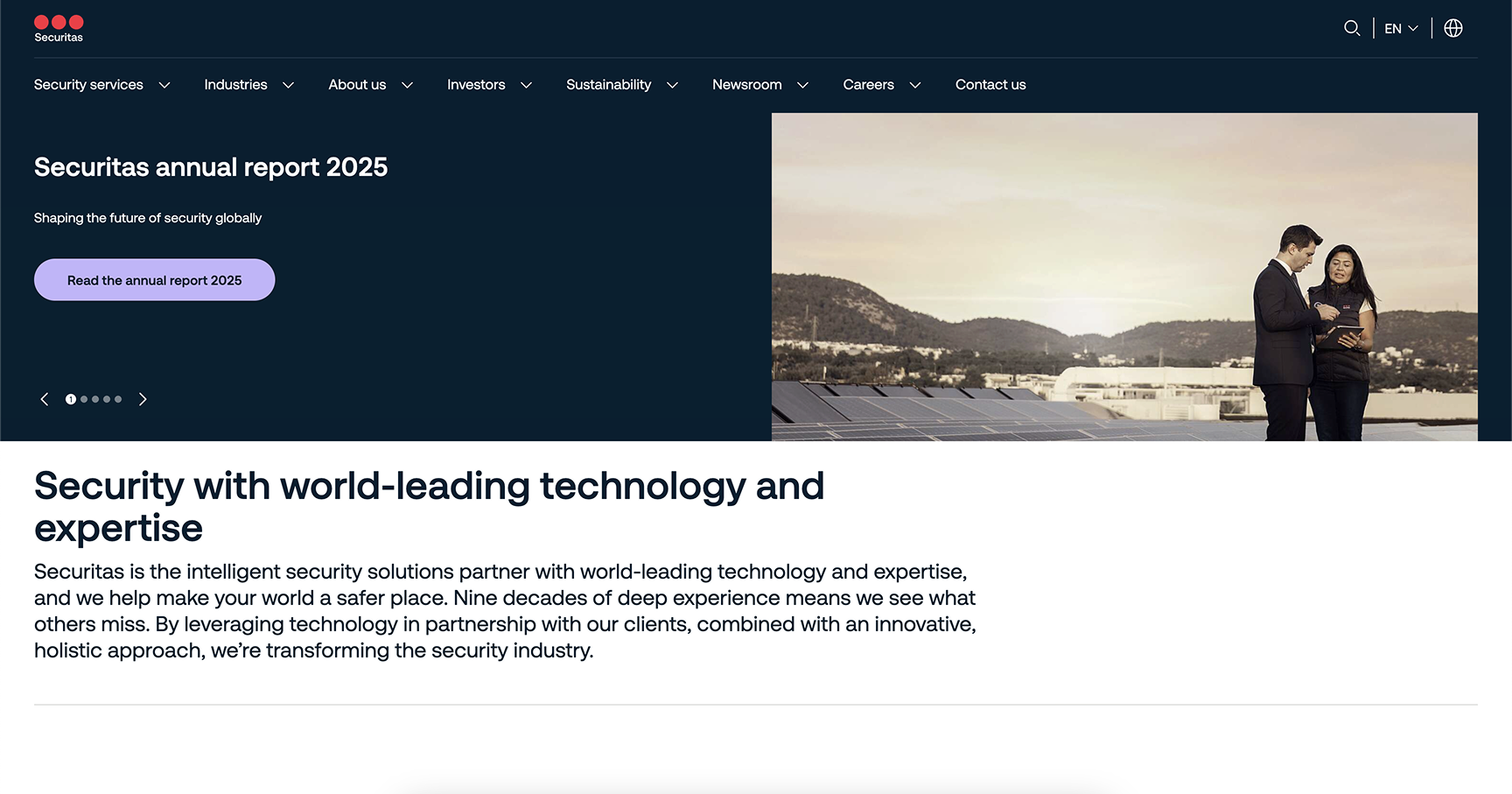
Designing for the CMS, not around it
Everything had to work inside Optimizely. That shaped the design process fundamentally — features weren't designed in isolation, they were designed as blocks: modular components with specific, configurable elements that web editors could show or hide depending on their needs.
This meant a constant feedback loop with the frontend developer. Before any design was considered finished, it had to be stress-tested against what was actually buildable. That constraint wasn't a limitation — it became a discipline. It meant fewer throwaway concepts and more design that shipped.
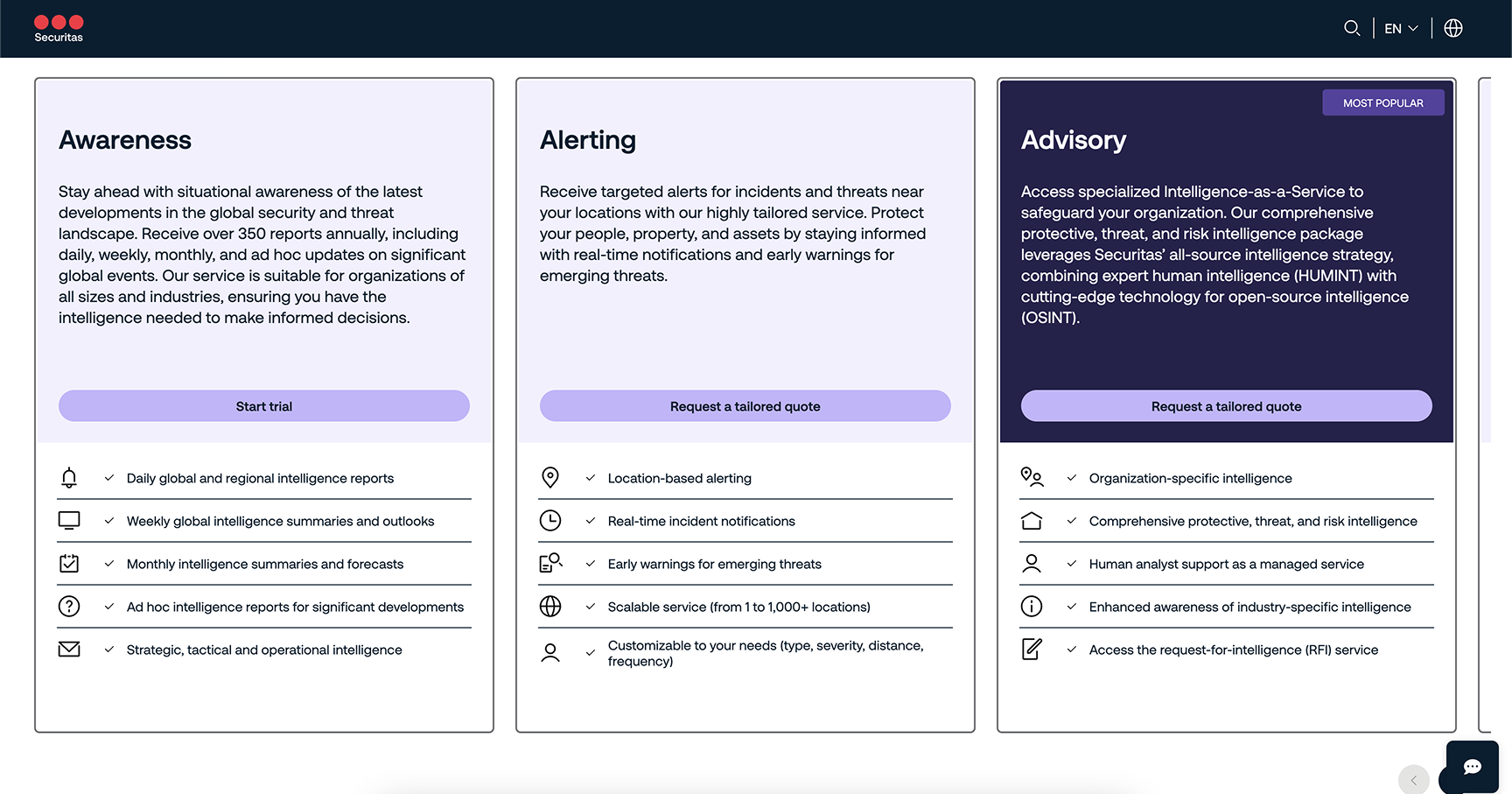
A platform used in every language
Web editors across different countries and regions build their own local versions of the site using the same block system. That means the same components need to hold up in English, Swedish, Chinese, Arabic, and Cyrillic — writing systems that vary wildly in character density, line height, and directionality.
No design could assume Latin script or predictable text length. Every component was stress-tested for overflow, reflow, and readability across scripts. It added a layer of complexity that most platform designers don't encounter, and it made the work more rigorous for it.
Accessibility as a first-class concern
WCAG 2.1 compliance wasn't a final checklist — it was woven into the process from the start. I conducted accessibility audits to identify existing gaps, then carried those findings into every new feature: contrast ratios, focus states, semantic structure, interaction patterns for assistive technology.
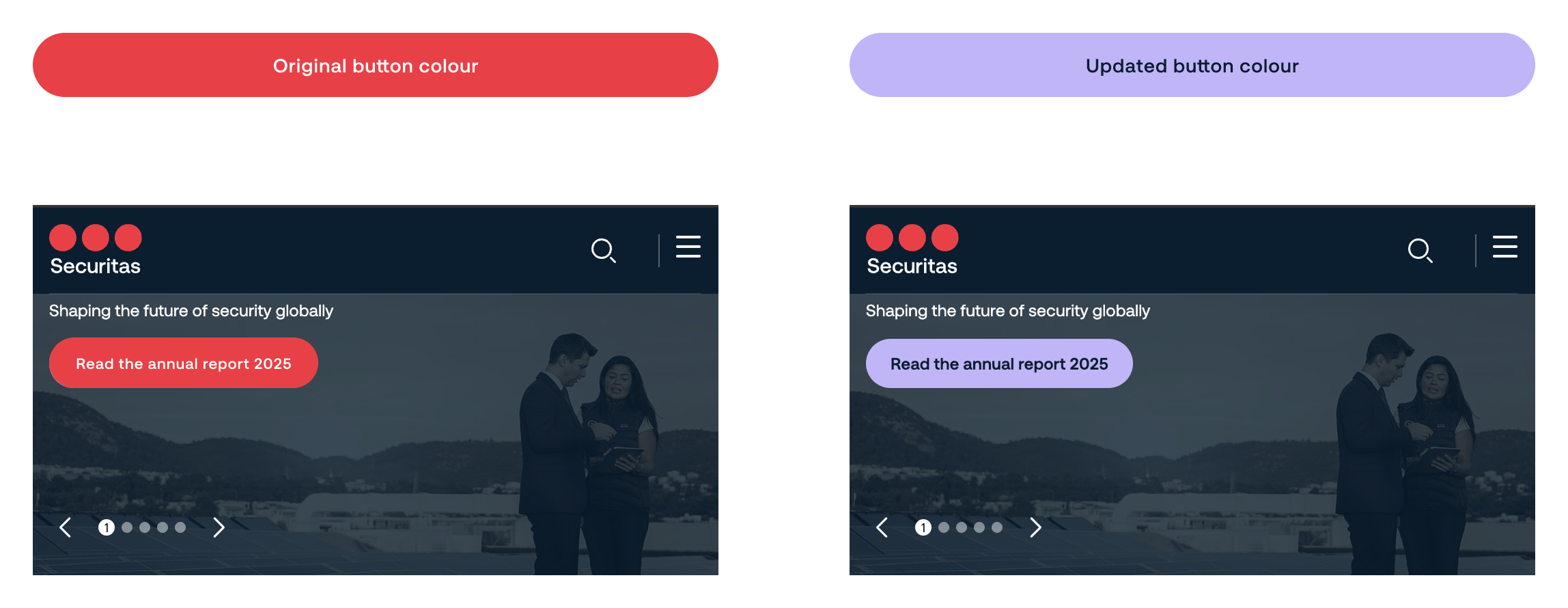
The color scheme update was part of this. The existing palette had inconsistencies that failed contrast requirements in several contexts. The new system was built to pass at every level, while still feeling like Securitas — not a compliance retrofit, but a refinement that respected the brand.
The design library
I inherited an existing Figma component library and maintained it throughout the project — adding new components as features were introduced, refining inconsistencies in the existing ones, and keeping naming conventions organized enough to be useful for both design and developer handoff.
I also improved the handoff pipeline itself: establishing clearer conventions between design and development so that implementations stayed closer to intent. The result was a library developers could navigate independently, which reduced back-and-forth and kept delivery moving.
End
Working on a platform at this scale — global, multi-language, compliance-critical, editor-facing — is a different kind of design problem than building something new. The challenge is less about invention and more about understanding constraints deeply enough to work inside them well. That's what this project was.